Showing posts with label botanic gardens. Show all posts

Friday, 3 January 2025

Niagara


Niagara


In order to see the Canadian side of Niagara Falls, we joined a day tour from our Toronto Airport hotel, taking a scenic drive along the Niagara Parkway - which Winston Churchill called “The Prettiest Sunday Afternoon Drive in the World”. It is one of the oldest roads in Ontario, originally an aboriginal trail - along the west side of the Niagara River. There are several special points of interest that the day tours stop at, such as the Whirlpool Rapids, which is a natural phenomenon of the Niagara River.  When the Gorge narrows and the river falls, it creates rapids of about 22 mph – some of the wildest and most dangerous in the world. You can view them from the White-Water Walk or Whirlpool State Park, New York side where you need to follow a series of stairways and paths to the base of the gorge. 


Between the Botanical Gardens and Queenston Heights Park is another popular sight -The Floral Clock; a 40-feet diameter working clock that is one of the largest of its kind in the world. This unique and stunning display is a very popular stop on the Niagara Parkway. The floral design is changed twice each year - with violas in the Spring, and cultivars of Alternanthera and Sage, with Golden Privet and Blue Festuca Grass as a contrast - during the Summer and Fall. A Tower at the back of the clock houses Westminster chimes that play every 15 minutes and when it is open, you can take a peek at the mechanism and photographs that show the history of every face design all the way back to 1950. The 10-foot-wide water garden that curves 85 feet around the base of the clock is a popular place to make a wish! 


The Living Water Wayside Chapel is a tiny white building built in 1964 by the Niagara Falls Christian Reformed Church. It is famous for being the Guinness World Record holder as the smallest chapel in the World - with a floor space of about 13 feet by 6 feet and is open to visitors when there are no ceremonies happening.


Niagara Parks’ Botanical Gardens have been part of the Niagara Garden Trail since 1990, featuring 99 acres of award-winning landscapes. Every season reveals gorgeous new blooms, particularly along the walking trails and through the arboretum - one of Canada’s finest tree collections, or the aromatic herb garden, or North America’s largest and most distinguished Victorian rose garden. Queenston Heights is a geographical feature of the Niagara Escarpment immediately above the village of Queenston - where you can learn of the famous 1812 Battle of Queenston Heights and see the 150-ft monument commemorating it.


There are so many other things to do, apart from just looking at the falls; you can walk through Niagara Falls State Park to see them – which was a blaze of autumn colour when I was there. You can eat at the most celebrated restaurant - The Skylon Tower, which offers fine dining 775 feet above the Falls! Choose from the legendary Revolving Dining Room Restaurant with the most breathtaking views or the family-affordable Summit Suite Buffet restaurant.  Admission to the Observation Decks attractions is FREE when dining!  


Apart from this very special place, there are many other places to eat and relax whilst soaking up the atmosphere of this very special place. Clifton Hill, Falls Ave, Victoria-Centre, Fallsview and Lundy's Lane are full of shops, cafes, arcades and even an indoor skydiving centre – all within close proximity to the Falls. 


The Sky Wheel on Clifton Hill is Canada's largest observation wheel, a towering 175 feet high; from where you will be treated to memorable views of the Horseshoe, American Falls, the Niagara River and spectacular aerial views for miles in every direction. You can take a 15-minute Helicopter Ride for a scenic bird’s eye view - flying over them is one of the best ways to view the Falls. 


There are two choices of boat tours; if you are visiting in Canada - you will ride aboard Hornblower's Niagara City Cruises; and from New York the tour is on the Maid of the Mist boat ride. Each 20-minute boat tour takes you on the journey of a lifetime! As well as enjoying magnificent views of Niagara Gorge, American Falls, Bridal Veil Falls, and come face-to-face to the Canadian Horseshoe Falls – you get completely soaked!


I do like to try something different……so I opted for the Zipline. There was no need to prebook this, and although it suggested a waiting time of well over an hour; by the time I had climbed up to the Launch Deck – stopping to take photos at various observation points on the way – the time whizzed by. 


Once I arrived at the Launch Deck and had the safety gear strapped on – my heart was racing. Any possessions I had on me, were put in a special bag strapped to my back, everything was double checked, and then it was time to go.


 I was hooked on to the wire above, had to sit back (into what was strapped onto my back) – told to spread out my arms and legs – then let go! The next 60 seconds, gliding down 2,200 feet of cable, facing the mighty waterfall, was the most exhilarating you can imagine. 


To be able to see this incredible force of nature and enjoy such views was spellbinding. After landing safely at the base, there were official photos taken before being taken back up to the booking office area. The experience was captured forever on camera and also put together in a unique video – that I just had to buy – at a very reasonable cost. I can highly recommend this for anyone, of any age – it really was the best adrenaline pumping, invigorating time ever! https://www.viator.com/tours/Niagara-Falls-and-Around/Zipline-To-The-Falls-Niagara-Falls-Canada/d773-75080P1?mcid=56757


Thank you for taking time to follow my adventures,

Lynne

These are my other blogs :-


Wednesday, 1 May 2019

Brisbane


Brisbane


I was lucky enough to have 2 free days in Brisbane between tours, and thoroughly enjoyed every moment of my time there. Brisbane, the capital of Queensland, is situated on both banks of the Brisbane River, some distance from the ocean.


As with many other cities in Australia, the transport system here is brilliant; as well as having free buses that travel around the city, they have the Cityhopper – a boat which crosses and goes up and down the river - free of charge. This operates every day of the week and runs frequently from several quays on both sides of the riverbank.


I started my day walking into the city, seeing how typical an Australian city Brisbane was; Queen Street Mall is the city’s main retail and entertainment precinct, an open-air pedestrian mall with hundreds of stores. There are regular events held in the mall including a farmer’s market, live performances and food festivals.


Anzac Square is in the heart of the city, and is a heritage listed site dating back to 1930, overlooked by the State and Commonwealth government offices. The square has 3 paths representing the 3 branches of the armed forces, landscaped gardens, lawns, trees, statues, and memorials commemorating its armed forces. 


The main feature is the Shrine of Remembrance, a war memorial dedicated to the men and women who served abroad representing their country. It resembles a round Greek temple, raised up, surrounded by 18 columns, enclosed by railings, and inside is a bronze urn with an Eternal Flame.


Close by is the Roman Catholic Cathedral of St Stephen, a heritage listed building with St Stephens chapel, built in 1849, next to it.


There are all manner of sculptures around the city, many made from various types of scrap metal – such as the iconic Roos. Not far away is St. John's Anglican Cathedral, another active place of worship and a centre for concerts and arts with a famous men’s choir and its own orchestra.


I made my way to the Botanic Gardens, which have a delightful river frontage and many attractions within them, including various play areas, ornamental ponds, a Bamboo Grove, and Weeping Fig Avenue which was planted in the 1870's.


A cannon, cast in 1803 and sent on the immigrant ship, The Clifton, was originally set up in Queens park; but it was put in the Botanic Gardens in 2015. The multicoloured planted borders looked magnificent, as did the centre of the gardens that had been newly planted with a fabulous annual display.


There is a wooden pavilion where you can stand and admire the gardens, and beneath it are some toilets. 


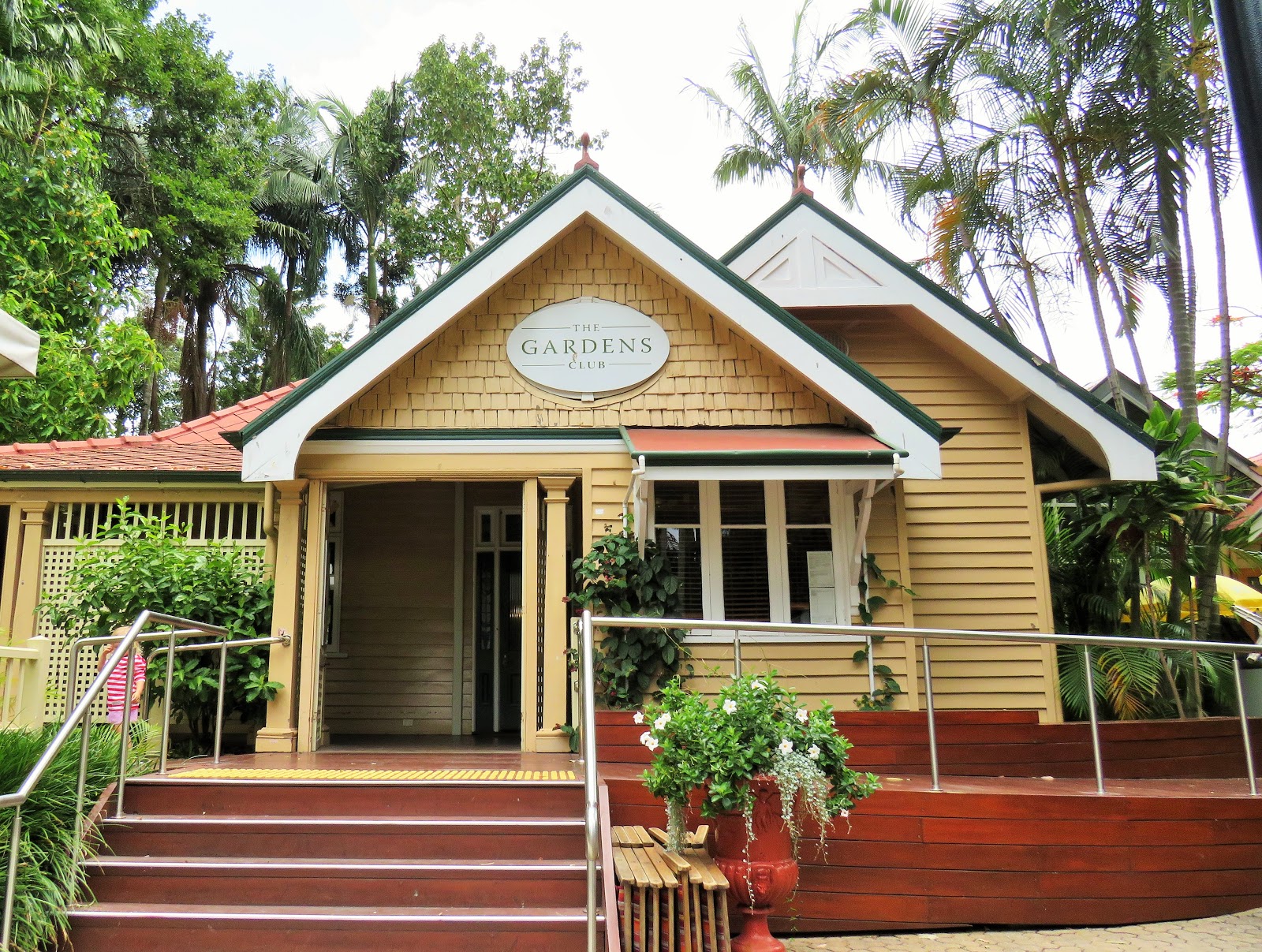
Further through the park is The Gardens Club, the restored heritage listed Curators Cottage and the adjoining cafĂ© which is open 7 days a week and is a great place for a drink or something to eat – which was good, because I was ready for a sit down.


There was more exploring of the city to be done, which is full of interesting colonial type buildings that have all been so well preserved. 


Brisbane City Hall & Museum is three attractions rolled into one, the City Hall, the Brisbane Museum and the Clock Tower. The City Hall is a Heritage Listed building constructed between 1920 and 1930, and it is where famous guests and royal dignitaries are bought to. 


The Hall was built in the Renaissance style and has three floors, the central auditorium being inspired by the Pantheon in Rome.


There is a cafĂ© on the ground floor called The Shingle Inn, full of character and a great place for a drink.  


The building is topped by the impressive 92-meter-high clock tower, modelled on St. Mark’s tower in Venice with a face on each of its four sides. 


Tours to go up the clock tower every day are free, but you must pre-book a time slot at the Museum Reception, as only so many people can go at one time.


To reach the observation deck, you are taken up in a hand-operated elevator with a tour guide who tells you the history of the clock and its tower. The clock is 5 metres in diameter and its minute hand is 3 metres long; and when it was first built, it was the largest public clock in Australia.


It was a fascinating little tour, which I can highly recommend and the view from the observation platform was brilliant – it really gave a good prospective of the city below.


Once I was back down at the reception, I headed to The Museum, which is on the same floor, and contains displays of art from top Brisbane artists, as well as historical charts, maps and paintings about Brisbane and its past, which I found very interesting. 


At the city hall you can also join a free walking tour of the city every day – this is run by Brisbane Greeters.


As daylight was fading, I headed to Roma Street Parkland, described as the most expansive subtropical parkland, with themed gardens, playgrounds, boardwalks, waterways and public art. As I approached the park, I could not believe how many people were heading in the same direction – thousands of them. 


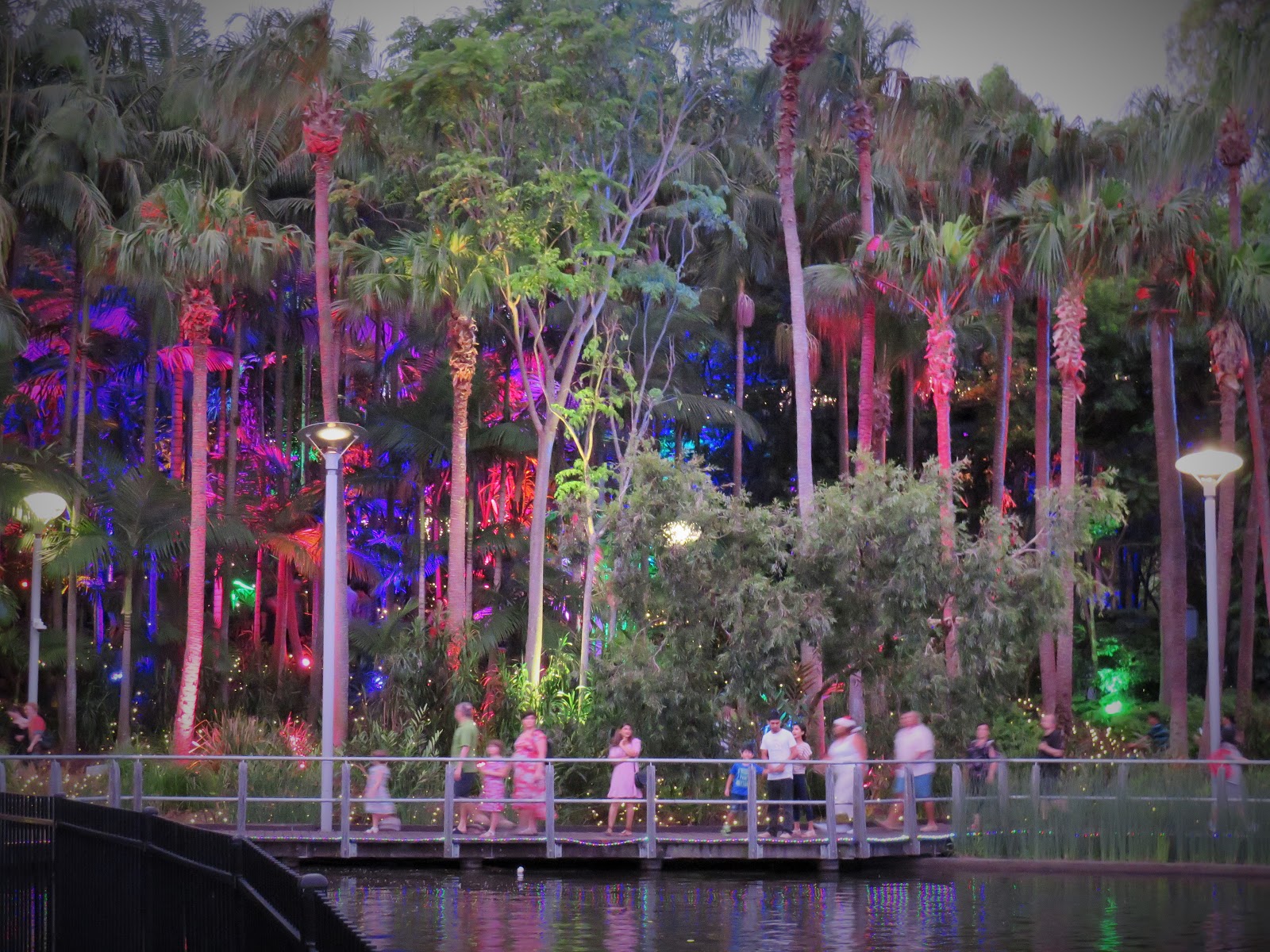
In the lead up to Christmas, an area of the park had been transformed into the Enchanted Garden; here a magical lighting display takes visitors on a journey along a colourful lit path through the garden. As much as entry to this is free, access was limited – so I had to join the queue. It was well worth it, what a delightful experience, following the crowds through the most mesmerising colourful light show.


There was just enough light to make out some of the garden’s other features such as Fern Gully, and the rain forest section where you walk along a raised boardwalk looking down through the forest canopy – that was lit up beautifully. 


The park also has a lake, lawns, areas for sports, and an Amphitheatre where performances are staged. The lawned area was surrounded by stalls selling food and drinks, and it felt like every family in Brisbane was there enjoying the spectacle. It was the end of a great first day in Brissie.


My other full day here started with a free trip down the river from North Quay to Eagle Street Pier, where I had decided to walk along the riverbank and see Story Bridge from every angle. The iconic Story Bridge, named after John Douglas Story, was constructed in 1940; it is a heritage listed site which spans the Brisbane River and is Australia’s longest cantilever bridge. During certain anniversaries and celebrations, the bridge is lit up at night. It is possible to climb the bridge at various times of the day, with an organised group called Adventure Climb.


I walked below the bridge, seeing Kangaroo Point, the Cliffs, further down the Brisbane River, and the Howard Smith Wharves which are being modernised and will soon be a hive of activity.


From here I walked to Fortitude Valley, Brisbane’s China Town district, and caught a train back through the city and over the river to the South Bank area.


This is the cultural and educational part of the city, covering a huge area along the river bank. Even the train station has historic poignant photographs on the walls of aboriginal people from many years ago.


Starting at one end, I went into Queensland Art Gallery & Gallery of Modern Art (GOMA) which is Australia’s largest modern art museum, holding approximately 16,000 pieces of art from around the world. 


The works are incredibly varied and include a large collection of Asian, Pacific, Indigenous Australian Art, as well as Australian Art.


I was fascinated by some of the galleries and thoroughly enjoyed my time here and loved the statue of an elephant standing on its head outside. 


Next was Queensland State Library which is the State’s main reference, research and reading library as well as holding important heritage documents.


 When I visited, there was an exhibition about some of Queensland’s islands, which I found very interesting, as my next trip was going to be visiting several of them.


An open corridor links many of these buildings and here you will find all manner of information boards and exhibits, as well as free Wi-Fi.


Queensland Museum, another one that is free to get in, highlights all aspects of Queensland’s past, its cultures, history and people, especially with cultural significance to the Aborigines and Torres Strait islanders, and pieces from the Pacific islands.


 Another section displays over 700,000 items of natural history and taxidermy pieces.


There are huge dinosaur replicas, a miniature Hobbit house, and a giant whale replica hanging from the ceiling. 


It has a shop and a really good cafĂ© – where I stopped for lunch and can highly recommend it.


Heading back out along the river, there are cinemas and theatres – this is the place to come to see any sort of show. Then you come to the “Letters” – an icon of the city – BRISBANE – somewhere you just must stop and take a photograph.


This is really the start of the Park, 17 hectares of a lush play and recreational area that is enjoyed by people all day every day. Originally this area was not a very affluent part of Brisbane but after the successful World Expo in 1988, it was transformed into the upmarket South Bank Parklands.


 As well as having a delightful riverfront promenade, where you can catch the ferry; there are many restaurants, shops, huge grassed areas to sit and relax, an amphitheatre and a walk-through rain forest.


The Wheel of Brisbane, which takes you 60 metres in the air, can be seen from almost anywhere in the city and looks wonderful when it is lit up at night time.


The stunning three-storey high Nepalese Pagoda is one of South Bank’s most treasured attractions, it was the Kingdom of Nepal’s offering to the city for the World Expo 88 and is now a permanent feature in the park.


As is The Arbour - a kilometre-long walkway comprising of 443 curling, galvanised steel posts that are all clad with magenta bougainvillea flowers, making a shaded tunnel that is perfect for walking under on a hot day.


But the main family attraction of South Bank has to be Streets Beach; described as Australia’s only inner-city, man-made beach. There are several lagoons surrounded by white, sandy beaches and tropical plants; with clear streams ideal for little ones to paddle in. 


It is an interactive water park where families can come for the day to spend time together playing in safe water – which can’t be done on many of Queensland’s beaches.


The water park areas are free to use and are patrolled by lifeguards. I have never seen such a fabulous open water area in a city, being enjoyed by so many people, it is a wonderful idea – especially on a hot day………..yes, I did have to dip my feet in!


At the farthest end of South Bank is the Maritime Museum where you can easily spend a few hours!


Later that day, I was lucky enough to be taken 7km up to Mount Coot-tha Lookout, also known as One Tree Hill – for some fantastic views of the city, and as far away as Moreton Bay.


The lookout point was established in 1918 but has recently been given a facelift and now has a Restaurant and Café. There are also other attractions up there such as the Botanic Gardens, the Herbarium and the Planetarium.


Another interesting place to spend half a day is the Lone Pine Koala Sanctuary, which was the first of its kind in the world when it opened in 1927; and is home to over 100 koalas as well as another 100 Australian species. The park has lush gardens and is in a natural setting where you can hand-feed the free-roaming kangaroos, hold a koala and pet certain animals and birds. Visitors can take part in special animal experiences for an added fee.


The last part of my time in Brisbane was a trip to the coast north of the city, to Moreton Bay, for a meal overlooking the ocean. Then a visit to Redcliffe, to see the unique Bee Gees Walkway. 


This 70-metre walkway is full of photographs and information about the pop group with bronze statues of them and it had their music playing in the background.


It was absolutely fabulous. And what a memorable way to end my day and time in Brisbane; a fabulous city with so much to offer.

Thanks for taking time to spend time in Brisbane with me...............

Lynne 


Please check out my other blogs ..............